
Worcester, MA · Garage Door Service
Replacing a Garage Door in Worcester: What Actually Matters
A guide for Worcester homeowners replacing a garage door on 1960s-70s housing stock, built for the region's cold, severe winters and older openings.
- Repairs & new doors
- Springs & openers
- Serving 4 nearby communities
The Common Mistake
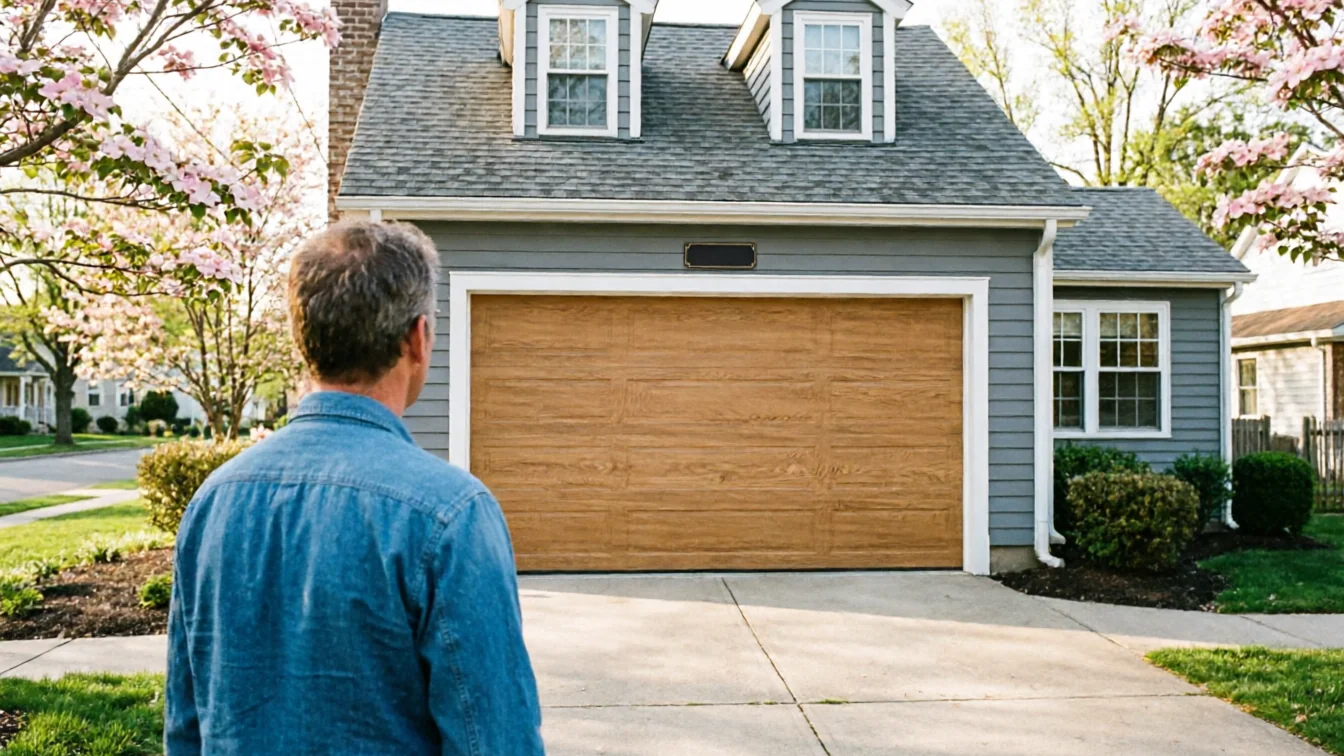
The mistake we see most in Worcester is someone ordering a door by the size on the old one without checking what's behind it. Housing in this area was mostly built between 1938 and 1993, with the median landing around 1968, which means a huge share of garages across the 55 named neighborhoods we work in - from Grafton Hill to Cherry Valley to Burncoat - still have the original rough opening, original jamb framing, and in a lot of cases original track hardware bolted straight to wood that's been through sixty winters. Buying a door off a size chart and assuming it'll drop into that opening the way a new-construction door would is how you end up with a door that doesn't seal, a track that fights the framing, or an installer charging extra on install day to fix what the measurement missed. The other version of this mistake is buying on insulation value alone without asking whether the opening and the hardware can even take the heavier panel. A thicker door needs stouter springs and sometimes a stronger header. Measure twice, and have someone who knows 1960s Worcester framing look at the opening before you order, not after.
The Problem
Most of the garages behind these older houses were built for a single-layer steel or wood door with minimal insulation, because when the house went up, nobody was pricing heating a garage. Decades later, the opening is still that size and that framing, but the climate asking something of it hasn't gotten easier - this is a cold, severe climate zone, and a garage door is one of the largest uninsulated surfaces on a lot of these houses. Swap in a modern door with real R-value and you're often fighting an opening that was never built with a thermal break in mind: gaps at the jamb, no flashing detail, a slab that was poured before anyone worried about a cold floor under a door. The fix isn't just a new door, it's matching the door to the opening you actually have, which on a house from this era usually means added weatherstripping, sometimes a header reinforcement, and a bottom seal rated for a slab that was never built level to begin with.
What to Check
Before you order anything, check four things. First, the rough opening width and height against the new door's actual case size, not the nominal size on the box - older openings in this part of the state are rarely square. Second, the header: if you're going from a single-layer door to an insulated double-layer door, the added weight changes spring requirements and sometimes needs a stronger header than what's framed in a house from the 1960s or 70s. Third, the track path - a lot of garages here were built with less headroom than a modern door assumes, especially where a water heater or furnace got added to the garage later. Fourth, the slab edge and threshold, since houses from this era often settled unevenly over fifty-plus years and the gap at the bottom isn't always what it looks like from inside the garage. None of this shows up on a tape measure of the door opening alone - it takes someone opening the door and looking at the hardware and framing together.
What the Weather Here Does to It
A cold, severe winter puts a different kind of stress on a garage door than a mild one does. Steel panels contract in deep cold, which is exactly when an older, worn weatherstrip stops sealing and a loose track bolt starts to rattle loose faster. On a single-layer door from the era most of this area's housing was built in, condensation on the inside face is common in winter, which drives rust at the bottom panel seam over the years - and that's the panel most owners never replace until it's the one failing. Springs also take more load in cold temperatures because the steel itself stiffens, so a torsion spring that's been fine for years can snap in a cold stretch that would have been harmless in fall. None of this means you need the most expensive door on the lot. It means whatever you buy should be rated and installed with this climate in mind, with attention paid to the seal and the spring sizing, not just the insulation sticker on the panel.
Frequently asked questions
Does my garage door need to match the age of my house?
Not exactly, but the opening and framing usually do date to when the house was built. Across most of this area that's 1938 to 1993, with a lot of stock from the 1960s and 70s, so the rough opening and header were sized for the door styles common then. A new door has to be matched to that opening, not just ordered by nominal size.
Is an insulated door worth it here?
Given the cold, severe winters this area gets, insulation does more work on a garage door here than it would somewhere milder. The bigger question is whether your header and spring setup can handle the added weight of a double-layer insulated panel, which is worth checking before you order rather than after.
Why did my old door's bottom seal fail so fast?
On older single-layer doors common in this area's housing stock, winter condensation on the inside face drives rust at the bottom seam faster than owners expect. It's usually the first part to go, and it's often the reason a door that otherwise looks fine starts leaking air and water at the threshold.
Related garage door services in Worcester
More garage door guides
Book garage door service in Worcester
Call now or request a quote - tell us what the door is doing and where you are.