
Worcester, MA · Garage Door Service
Garage Doors in Worcester's Pre-1993 Housing Stock
Worcester's 1938-1993 housing stock often has garage doors built with no insulation layer, which matters once winter sets in across central Massachusetts.
- Repairs & new doors
- Springs & openers
- Serving 4 nearby communities
The Common Mistake
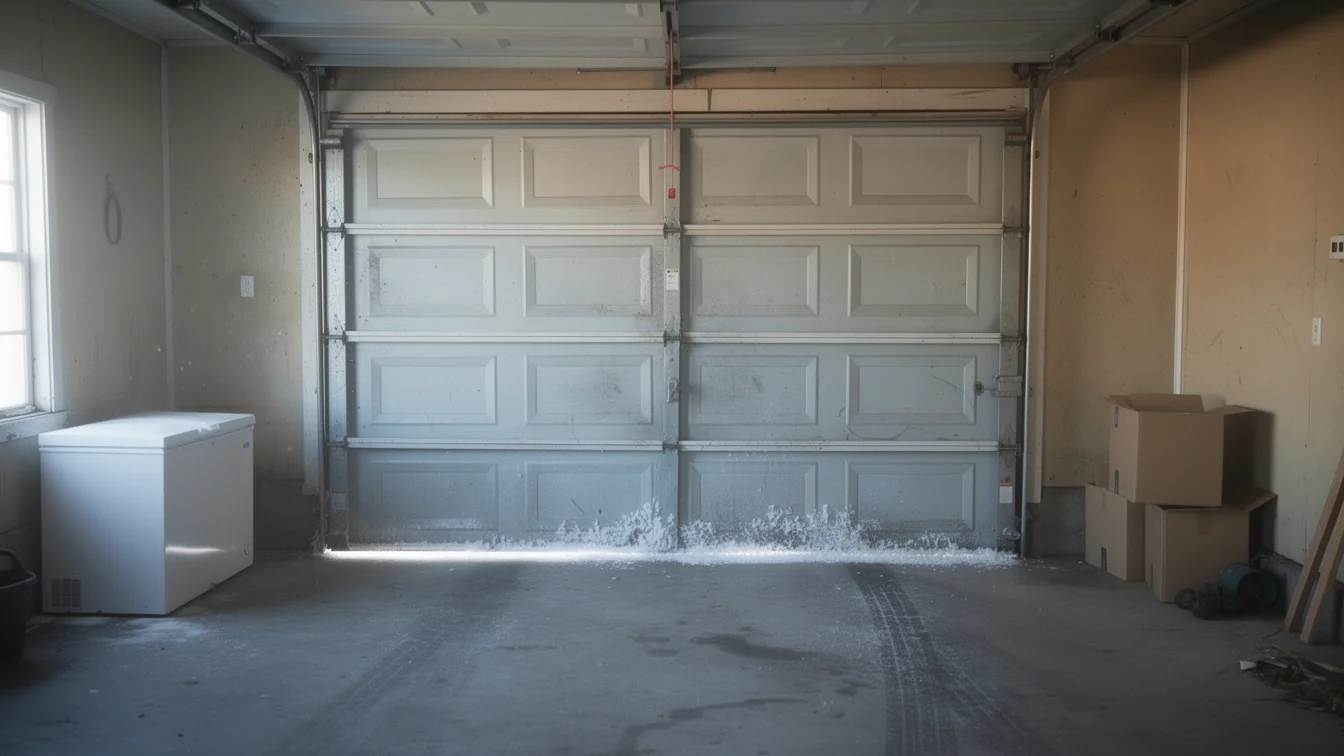
Most calls we get start the same way: the door is noisy, or it's hard to lift, and the owner assumes it's a spring or an opener problem. Sometimes it is. But in a lot of Worcester's housing stock - built between 1938 and 1993, with the median landing around 1968 - the door itself is the issue, not the hardware bolted to it. These are doors made before any insulation requirement applied to residential garage doors at all. A single layer of steel or a few wood panels, no thermal break, no foam core. Owners swap the opener, replace the springs, add new weatherstripping around the edges, and the garage still feels like an icebox every January. The mistake isn't the repair work. It's treating a 1960s single-layer door like a modern insulated one with a maintenance problem, when the door itself was never built to hold heat. Weatherstripping helps seal air gaps, but it does nothing for a steel panel that conducts cold straight through. Fixing a door's moving parts won't change what the door is actually made of, and in this part of the state, what the door is made of matters more than people expect.
The Problem
A door built any time from 1938 through the early 1990s was very likely made as a single layer of material - steel, aluminum, or wood - with no foam backing and no vapor barrier. That construction wasn't a defect; it was just how doors were made before insulation standards became common for the residential segment. The problem shows up two ways. First, thermally: an uninsulated panel transfers outdoor cold directly to the inside face, which is why an attached garage with one of these doors runs noticeably colder than the rest of the house in winter. Second, physically: a thin single-skin panel flexes more, dents easier, and doesn't hold its shape as well against wind load over decades. In a service area where the housing stock runs mostly 1960s and 1970s construction, this isn't a rare edge case - it's the typical door on a typical house. The fix isn't always full replacement. Some owners add a retrofit insulation kit to the existing panels. Others decide, correctly, that a door this old with this much wear is better replaced outright than patched again.
What to Check
Start by looking at the panel itself, not the opener. Knock on it - if it sounds hollow and feels like a single sheet of metal flexing under your knuckle, it's uninsulated. A double-layer insulated door feels stiffer and sounds duller. Check the bottom seal: on older doors this is often a thin rubber strip that's cracked or flattened, letting cold air straight under the door. Look at the weatherstripping along the side tracks - on a door this age it's usually original or close to it, and brittle rubber won't seal against a Worcester winter. Check the tracks themselves for rust pitting, which is common on single-layer steel doors that sweat on the inside face during cold snaps. If you have a torsion spring system, check whether it's the original - springs from this era weren't rated for today's heavier insulated retrofit panels, and adding weight to an old spring setup without adjusting it is how cables snap. Last, check for daylight gaps at the corners when the door is closed; on an old frame that's settled slightly, gaps there are common and worth measuring before you decide on a repair versus a full door swap.
What the Weather Here Does to It
Worcester sits in a cold climate band with severe winter conditions, and that's hard on an old single-layer door in specific ways. Condensation forms on the inside face of uninsulated steel when warm, moist air inside the garage meets a cold panel - over years that moisture cycle rusts the steel from the inside out, starting at the bottom corners where it pools. Freeze-thaw cycling stiffens track hardware and grease, which is why an old door that worked fine in October suddenly binds and groans by February; the rollers aren't gliding, they're being forced. Torsion springs lose a bit of tension in extreme cold too, so a spring that was already marginal on an old door can fail outright on the coldest morning of the year, usually with no warning. None of this is unique to one house - it's what this climate does to any door built in the 1938-1993 window that never got a thermal break. The honest limitation here: insulation retrofit kits help with heat loss, but they don't fix worn rollers, pitted track, or a spring sized for a lighter original panel - those need separate attention.
Frequently asked questions
Is my garage door definitely uninsulated just because the house is old?
Not automatically, but it's likely if the house wasn't renovated. Houses in this area built in the 1938-1993 window, with most of the stock from the 1960s and 70s, usually still have their original single-layer door unless a prior owner replaced it. Knock on the panel - a hollow, flexing sound means no foam core.
Can I just add insulation to my existing door instead of replacing it?
Sometimes. Foam-board or reflective insulation kits fit between the panel ribs on many steel doors and cut heat loss without a full replacement. They won't fix rust, bent panels, worn rollers, or an undersized spring, so they're a reasonable option on a door that's otherwise sound, not on one that's failing mechanically too.
Why does my old door get harder to lift every winter?
Cold stiffens the grease in rollers and hinges and can tighten tolerances in old track hardware, so a door that's a little worn already gets noticeably harder to move once temperatures drop. On a single-layer door with original hardware from the 1960s or 70s, this gets more noticeable each year as the parts age.
Should I repair or replace a door this old?
If the panel itself is sound - no rust-through, no major dents, no warping - a repair to springs, rollers, or seals can extend its life. If the steel is thin and pitted from decades of condensation, or the frame has shifted, replacement with an insulated door usually costs less over time than repeated repairs on original hardware.
Related garage door services in Worcester
More garage door guides
Book garage door service in Worcester
Call now or request a quote - tell us what the door is doing and where you are.