
Worcester, MA · Garage Door Service
Why Your Safety Sensors Keep Drifting Out of Alignment
Worcester garage doors run mostly 1960s-70s stock bolted to openers added decades later. Here's why the safety sensors on those setups drift out of alignment every winter.
- Repairs & new doors
- Springs & openers
- Serving 4 nearby communities
The Common Mistake
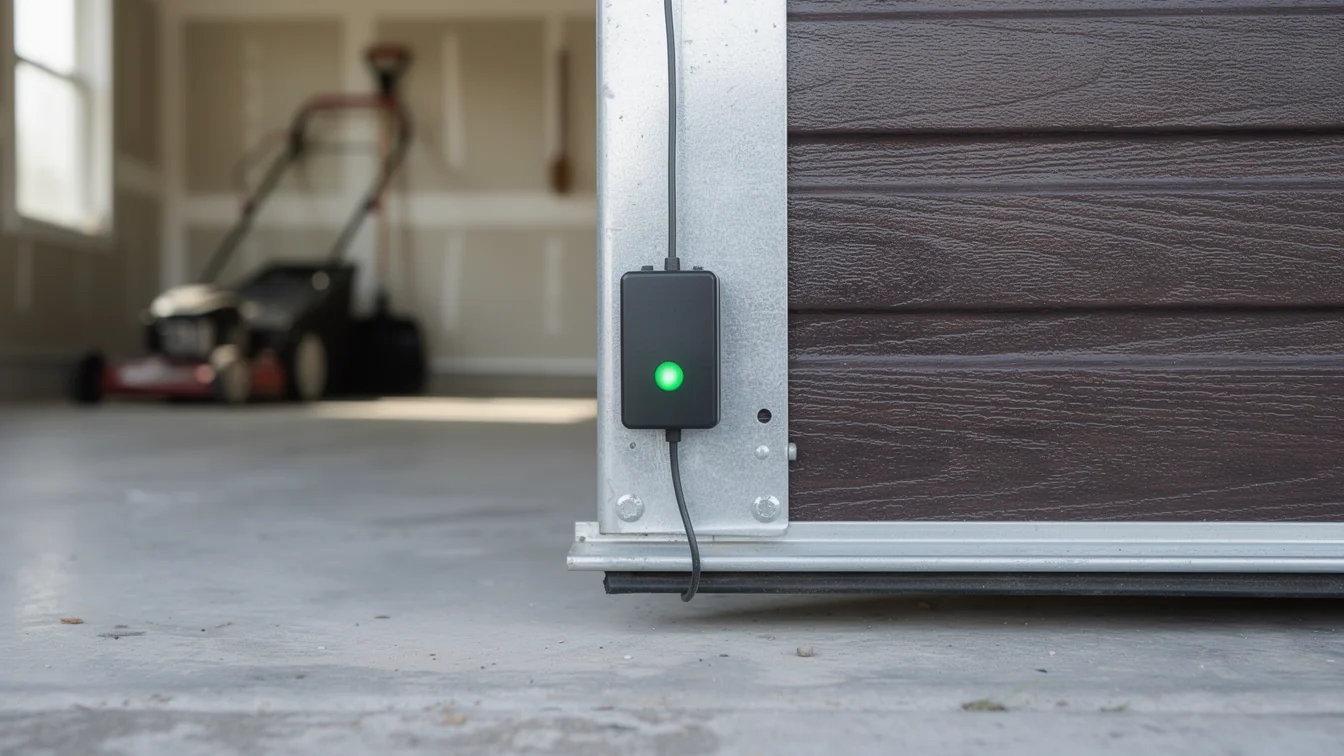
Most homeowners treat a blinking opener light as an opener problem. They call about a door that "won't close" and assume the motor is dying. Nine times out of ten in a neighborhood like Burncoat or Indian Hill, the opener is fine. The two photo-eye sensors mounted a few inches off the slab, one on each side of the track, are just out of alignment with each other by a few degrees.
That gap matters more here than it would in a newer subdivision. Worcester's housing stock runs 1938 to 1993 with a median build year of 1968, and most of that stock across the 55 areas we work is 1960s-70s construction. Those houses got garage door openers retrofitted onto doors and track that predate photo-eye safety sensors entirely, which didn't become standard equipment until the late 1980s. So you've got brackets drilled into trim and jamb material that's now 50-plus years old, shimmed and re-shimmed over the years by whoever put the opener in. The mounting was never built for precision, and it shows.
The Problem
A safety sensor pair only needs to be off by a sliver to stop working. Each sensor sends or receives an infrared beam, and if the receiving eye isn't looking dead-on at the sending eye, the door either refuses to close at all or closes and reverses for no visible reason. On the older brackets common to this housing stock, that sliver shows up as the wood trim shrinking, the slab settling unevenly under one side of the frame, or a loose screw that's been loose since before the current owner bought the house.
It's not usually one dramatic event. It's cumulative drift, a degree here from seasonal wood movement, a degree there from vibration every time the door runs. By year fifteen or twenty on a bracket from the Reagan era, the margin for error is gone.
What to Check
Start by looking at the two sensor eyes themselves, low on each side of the track, roughly six inches off the floor. Both LEDs should be solid, not blinking. A blinking light on one side usually means that one isn't receiving the beam.
Wipe both lenses. Dust and cobwebs collect fast in an unheated Worcester garage and block enough infrared to cause a false reading even when alignment is correct. Next, check that each bracket is still screwed tight into the jamb. On the older houses common to this area, the wood those brackets are mounted to has usually shrunk slightly since installation, which loosens the screws without anyone touching them.
Finally, sight along the tops of both sensors. They should point at each other in a dead-straight line. If one bracket has rotated even slightly, you'll see the angle. We don't recommend forcing a bent bracket back into shape; a stressed bracket will just drift again within a season, and at that point replacing the bracket costs less than the service calls it saves.
What the Weather Here Does to It
Worcester sits in a climate band we'd call cold and severe, and that's the piece most sensor advice online leaves out entirely. The freeze-thaw cycle here doesn't just crack driveways. It moves the slab the garage door frame is anchored to, a few thousandths of an inch at a time, every time the ground freezes and heaves and then thaws back down. Over one winter that's nothing. Over the fifteen winters a typical sensor bracket has been in place on a house built in the 1960s or 70s, it adds up to a visible tilt.
Cold also stiffens the wire insulation running to each sensor, and on an older installation that wire has often been stapled along the same jamb that's shrinking. A stiff wire pulling at a loosening bracket is a common reason sensors that worked fine in September start acting up the first cold snap in November. If you're chasing a sensor fault that only shows up below freezing, check the wire tension before you touch the alignment screws.
Frequently asked questions
Why does my garage door only act up in cold weather?
In a climate this cold, the slab and door frame move slightly with every freeze-thaw cycle, and stiff wire insulation pulls harder on sensor brackets in low temperatures. If your sensors are fine in summer and unreliable in winter, that's almost always a bracket or wire issue, not the sensor unit itself.
My house is from the 1960s. Is that why the sensors keep drifting?
Likely yes. Most Worcester-area houses were built between 1938 and 1993, with a lot of that stock from the 1960s and 70s, and those garages got photo-eye sensors added later, bolted to jamb wood that's shrunk and settled over decades. Newer construction with factory-mounted sensors doesn't see this problem nearly as often.
Can I just realign the sensors myself?
Yes, for a simple tilt. Loosen the wing nut or screw, sight the two eyes level with each other, and retighten. What we don't recommend is forcing a warped or rotted bracket back into place. That's a temporary fix that drifts again within a season.
Should I replace the sensors or just the brackets?
If the LEDs light up steady when aligned by hand, the sensors themselves are fine and it's a bracket or wire problem. We'd replace the bracket hardware before replacing sensor units that are still working correctly.
Related garage door services in Worcester
More garage door guides
Book garage door service in Worcester
Call now or request a quote - tell us what the door is doing and where you are.