
Worcester, MA · Garage Door Service
Detached or Attached: Why It Changes How Your Garage Door Holds Up in Worcester
Worcester homes built 1938-1993 split fairly evenly between attached and detached garages, and the difference matters once winter cold hits the hardware.
- Repairs & new doors
- Springs & openers
- Serving 4 nearby communities
The Common Mistake
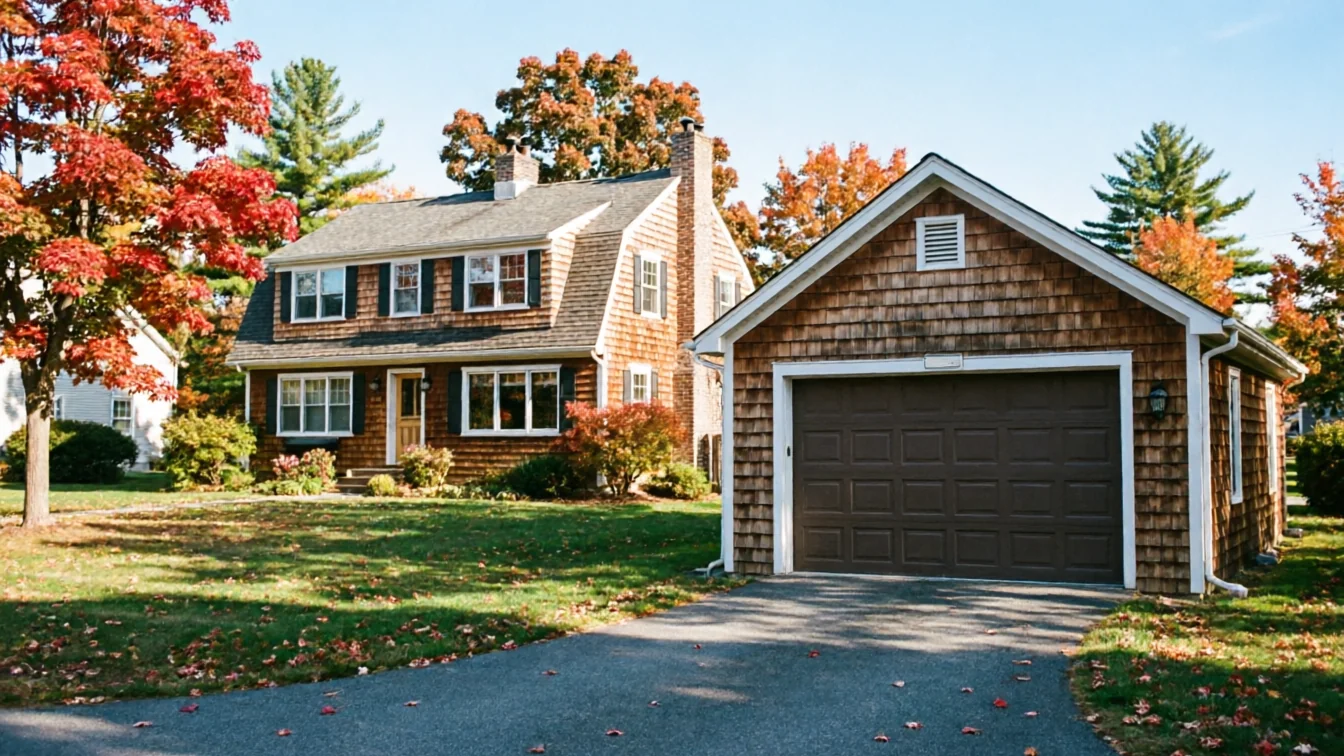
Homeowners across Worcester's older neighborhoods treat every garage door the same way, whether it's bolted to the house or standing on its own out back. That's the mistake. A detached garage built the same year as the attached one next door, both going up somewhere in that long 1938-1993 stretch that defines most of this city's housing stock, can behave completely differently once winter sets in. Attached garages usually sit against a heated wall, even if the garage itself isn't heated, so the slab and the framing around the door get some residual warmth. Detached structures out in Greendale, Cherry Valley, or Burncoat don't get that benefit. They sit exposed on all four sides, which means the wood jambs, the track mounting, and the weatherstripping take the full brunt of a Worcester winter with nothing buffering them. Painting over this difference with one generic maintenance routine is how people end up surprised when a detached door starts binding in January while the attached one down the street is fine.
The Problem
Worcester's housing stock runs mostly 1960s-70s across its 55 named neighborhoods and villages, which means a lot of these garages, attached or not, were built before anyone was thinking about insulated doors or sealed bottom tracks as standard. On an attached garage, the shared wall slows down temperature swings, so the door hardware, springs, and rollers see a narrower range of expansion and contraction over a season. A detached garage has no such buffer. Its framing moves more with the cold, which loosens track bolts and lets the jamb shift slightly out of square over the decades. That shift is subtle enough that nobody notices it until the door starts dragging on one side or the opener starts straining. It's not a defect in the door itself most of the time - it's the building settling into a pattern the original builders in the 1960s and 70s never accounted for, because insulated garage doors weren't common when these structures went up.
What to Check
If your garage is detached, start at the jambs where the track bolts into the frame. On a structure with decades of seasonal movement behind it, those bolts work loose faster than on an attached garage. Check that the track is still plumb on both sides - stand back and sight down it. Next, look at the bottom seal. Detached garages with no adjoining heated wall tend to show weatherstripping wear first, since the seal is doing all the work of keeping cold air out rather than sharing the job with an insulated house wall. On attached garages, the thing worth checking instead is the seal where the garage ceiling meets the house, since that's often the weak point for heat loss rather than the door itself. Either way, test the auto-reverse safety feature regardless of garage type - that's not negotiable and it's not specific to one structure or the other.
What the Weather Here Does to It
Worcester sits in a cold, severe climate band, and that matters more for a detached garage than people expect. A standalone structure has no shared heat source, so the metal track and torsion hardware contract fully with every cold snap, and expand again as temperatures swing. Repeated cycles like that, over a building that's often 50 to 80 years old given the median construction year of 1968 across the area, work screws and brackets loose at a steady pace. Attached garages get some moderation from the house itself, so the hardware doesn't see as wide a swing, though it's not immune. One honest limitation: we can tighten hardware and replace worn seals, but if the jamb on an older detached garage has racked out of square from decades of frost heave, no amount of track adjustment fixes that permanently - at some point the fix is structural, not mechanical, and that's a call we'll tell you straight rather than keep re-adjusting a door that won't hold alignment.
Frequently asked questions
Does a detached garage door need different maintenance than an attached one in Worcester?
Yes. Detached garages here get no heat buffer from the house, so track bolts and weatherstripping on them loosen and wear faster through a Worcester winter. Attached garages hold alignment longer but can lose heat at the ceiling seal instead. Check detached doors more often, especially the track-to-jamb bolts.
Why does my detached garage door bind up only in winter?
Most detached garages in this area sit on framing built decades ago, often in the 1960s or 70s, before insulated doors were standard. With no shared wall to buffer temperature swings, the track and jamb move more with the cold, which is usually what causes seasonal binding rather than anything wrong with the door panel itself.
Is it worth insulating an older detached garage door in Worcester?
Given the cold, severe climate here and how much temperature swing a standalone structure takes on, insulation helps slow hardware wear even if you're not heating the space. It won't fix a jamb that's already racked out of square, but it reduces the expansion and contraction cycle that loosens bolts over time.
Related garage door services in Worcester
More garage door guides
Book garage door service in Worcester
Call now or request a quote - tell us what the door is doing and where you are.