
Worcester, MA · Garage Door Service
What Winter Does to a Worcester Garage Door Seal
Worcester homes built mostly in the 1960s and 70s often have original seals long gone. Here's what a cold-climate New England winter does to garage door gaps.
- Repairs & new doors
- Springs & openers
- Serving 4 nearby communities
The Common Mistake
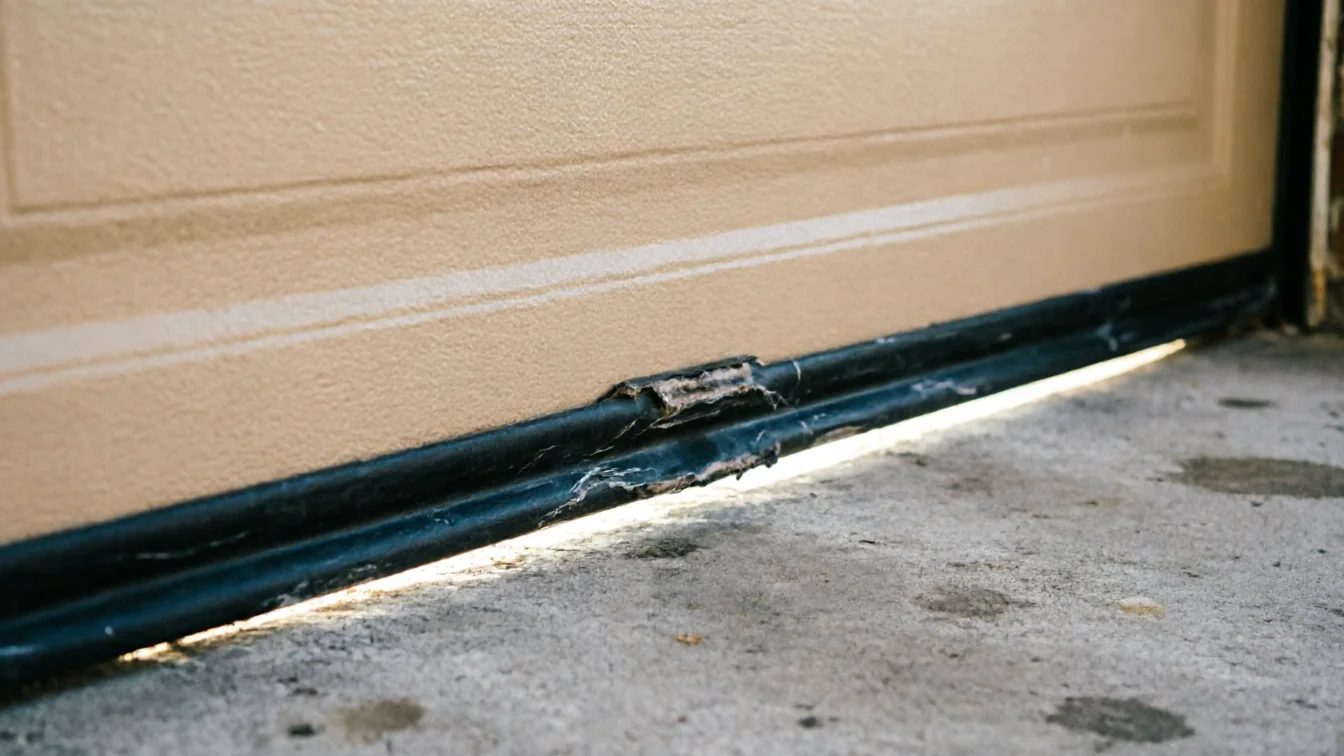
The usual move is to blame the door itself. A homeowner feels cold air pooling along the garage floor in January and starts pricing a full replacement, assuming the panel or the opener is the problem. Most of the time it isn't. Worcester's housing stock runs from 1938 to 1993 with a median build year around 1968, and across neighborhoods like Burncoat, Greendale, and Indian Hill, that means the weatherstripping on a lot of these doors is original or close to it. Rubber doesn't last sixty years. It hardens, shrinks, and pulls away from the jamb long before the door's hardware gives out. We get called out to look at a "dying" door and find a bottom seal that's flattened to a quarter inch and side jambs with gaps you can slide a finger through. Swapping that seal costs a fraction of a new door and solves the actual problem. The mistake isn't being wrong about the draft - it's being wrong about where it's coming from. A door with a worn gasket and a door with a failing opener feel similar from inside the house. They are not the same repair, and only one of them needs a new garage door.
The Problem
A garage door seal does one job: close the gap between a moving panel and a fixed frame. In a 1960s or 70s build - the bulk of what's standing across this area - that gap was cut to a tolerance that made sense fifty years ago, with steel track and u-channel trim that wasn't designed around today's thicker vinyl replacement seals. Over time the original rubber compresses permanently where the door rests, cracks at the corners where it flexes most, and pulls loose from the track where the fasteners have backed out. None of that shows up as a broken door. It shows up as a cold floor, a draft along the bottom plate on the wall it shares with the house, and condensation that beads up on anything metal stored near the door in winter. In a service area where most garages sit on slab and double as storage, a workshop, or overflow living space, a few degrees of air leak at the bottom of the door adds up over a whole season. It's not dramatic. It's just steady loss, and it's almost always cheaper to stop than most people assume before they call.
What to Check
Start at the bottom seal - the long rubber strip set into the bottom panel. Press it with your thumb. If it doesn't spring back, or if it's flat and shiny instead of round and pliable, it's done. Next, look at the vertical seals along both side jambs. Daylight visible around the edges when the door is closed means the gasket has pulled away or shrunk, not that the door is out of alignment, though it's worth ruling that out too. Check the corners where the bottom seal meets the side jambs - that's where cracking starts first, especially on doors original to houses built in the 1938-1993 range that make up most of this area's stock. Run a hand along the top seal where the door meets the header; a stiff, brittle strip that doesn't bend without cracking has outlived its rubber. Last, check the astragal - the retainer that holds the bottom seal in the track - for rust or bent aluminum, since a damaged retainer will chew through a brand-new seal in a season. None of this requires taking the door apart. Most of it you can do standing in your own driveway with the door down.
What the Weather Here Does to It
Worcester falls in a severe cold climate band, and that's the part that turns a slightly worn seal into a real problem fast. Vinyl and rubber both stiffen as temperatures drop, so a gasket that seemed fine in October can crack outright the first hard freeze in January. The bigger issue is the freeze-thaw cycle itself. Meltwater works into any gap the seal has already opened, refreezes overnight, and expands the gap a little more - every thaw after that makes it worse, not better. By the time spring comes, what started as a hairline crack at a corner seal is a visible gap you can see light through. On older doors with original steel jambs, ice can also bond the bottom seal to the slab overnight, which stresses the seal and the opener both when the door tries to lift in the morning. We won't tell you a new seal fixes everything - if the door itself is racked, off its track, or the panels have bowed, a new gasket just delays a repair the door actually needs. But on a door that's structurally sound, replacing a hardened or cracked seal before another winter cycle works it apart is the cheapest fix most garages in this area will see all year.
Frequently asked questions
How do I know if it's the seal or the whole door that's letting in cold air?
Check the rubber first. If the bottom seal is flat, cracked, or pulled away from the track, or you can see daylight around the side jambs, that's a seal problem, not a door problem. If the door also sags, binds, or won't sit flush in the frame even with a good seal, that's a structural issue and a new gasket won't fix it on its own.
Why does my garage door seal fail faster in winter here than people say it should?
Worcester sits in a severe cold climate band, and the freeze-thaw cycle is hard on rubber and vinyl. Meltwater gets into small cracks, refreezes, and widens them overnight. A seal that looked fine in fall can crack by midwinter, especially if it's original to a house built decades ago.
My house was built in the 1960s - is the seal original?
It's possible. A lot of the housing stock across this area dates to the 1960s and 70s, with some homes going back to 1938. If the seal looks original, hardened, or shows the flat, shiny wear pattern of decades of compression, it's worth replacing before another winter rather than waiting for it to fail outright.
Can I replace a garage door seal myself?
The bottom seal and side jamb weatherstripping are both things a handy homeowner can swap with basic tools. The part that trips people up is sizing the track or astragal correctly for an older door, since original hardware from the 1960s and 70s doesn't always match seal profiles sold today.
Related garage door services in Worcester
More garage door guides
Book garage door service in Worcester
Call now or request a quote - tell us what the door is doing and where you are.