Worcester, MA · Garage Door Service
What We Check First on a Worcester Service Call
Worcester Garage Door Pros explain the first checks on a service call, tied to the city's 1960s-70s housing stock and severe New England winters.
- Repairs & new doors
- Springs & openers
- Serving 4 nearby communities
The Common Mistake
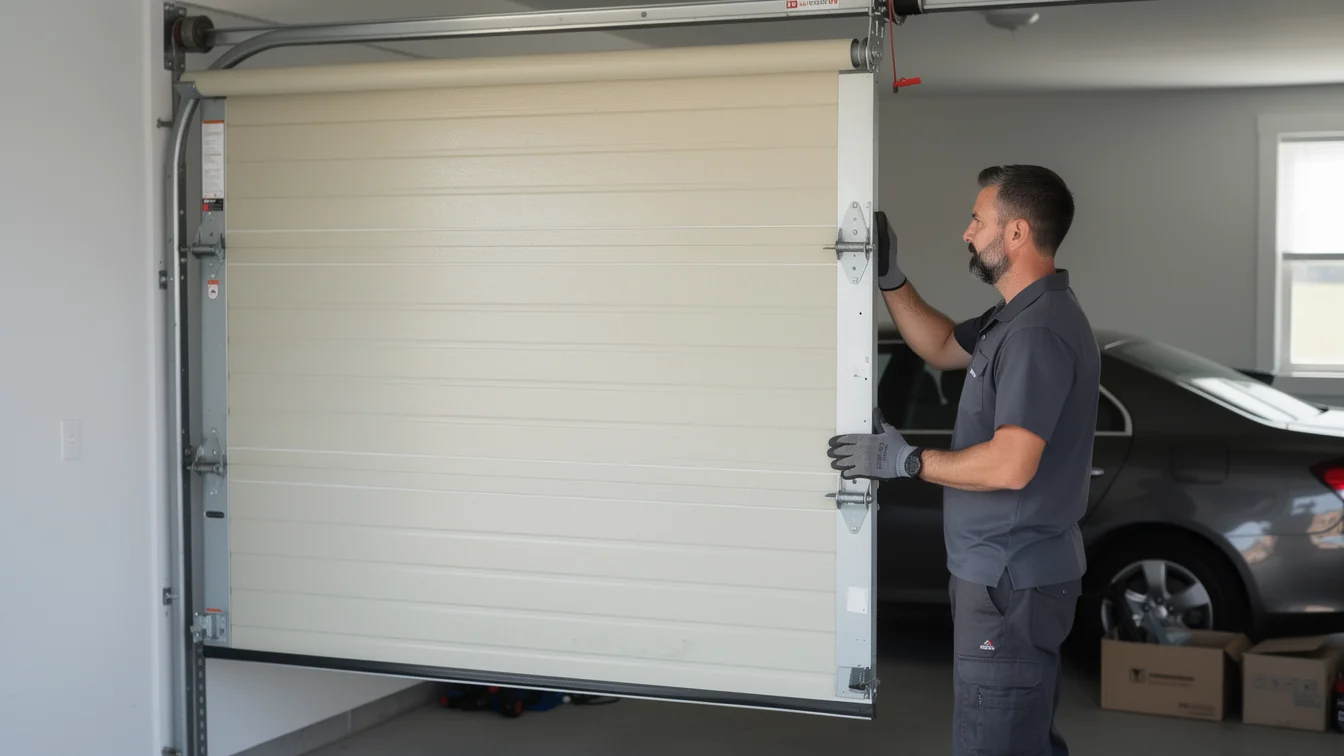
The usual mistake we see is an owner replacing the opener when the real problem is upstream of it. A chain-drive unit will strain and eventually burn out trying to lift a door that's bound up on worn rollers or a spring that's lost tension - and in a neighborhood like Burncoat or Greendale, where most houses went up in the 1960s and 70s, that spring has likely never been swapped since the house was built. Changing the opener fixes nothing if the door underneath it is fighting the whole way up. We also see people lubricate the track and call it done. Track lube doesn't help a bent track, and it doesn't help hinges that have loosened over fifty-plus years of seasonal expansion and contraction. The fix has to match the actual point of failure, not the part that happens to be easiest to reach. On a house built when Johnson is president, as a lot of this city's housing was, the hardware has had a long run, and a quick lube job is rarely the whole answer.
The Problem
Across the service area, F1 and F2 put the median build year around 1968, with most of the 55 named neighborhoods carrying 1960s-70s housing stock. That means original torsion or extension spring setups, steel tracks sized to doors that may have been replaced once or twice since, and openers that have been retrofitted onto hardware never designed for them. The mismatch shows up as noise, as a door that reverses for no clear reason, or as a spring that finally lets go after decades of cycles it was never rated to outlast forever. None of that is a flaw in how the house was built - it's just the math of hardware that has outlived its original service life in a city where the housing is older than the average American garage door system.
What to Check
We start at the springs: count the coils, check for gaps or rust pitting, and look for the kind of fatigue you'd expect on hardware installed when the median Worcester home was new. Next the tracks - plumb, aligned, and free of the dents that come from decades of car doors and bikes. Then the rollers and hinges, since original steel rollers on a house this age are usually worn oval instead of round, which is what causes the grinding sound owners report. We check cable condition at the bottom bracket, since frayed cable on an old extension-spring system is a safety issue, not a convenience one. Last is the opener's force and travel settings, which drift over time and need resetting rather than replacing in most cases. We don't start with the opener because on a house built before double-digit SUVs existed, the opener is rarely the first thing to fail.
What the Weather Here Does to It
F3 puts this area in the severe cold climate band, and that changes what a technician looks for. Steel contracts in deep cold, which tightens tolerances on tracks that were already a little off-plumb, and it stiffens the lubricant in old rollers until the opener is pulling against resistance it wasn't sized for. Extension and torsion springs lose a measurable amount of lifting force as the metal cools, so a door that worked fine in October can bind or refuse to open fully once temperatures drop hard. We also see weatherstripping on original-era doors crack and split in the cold, letting in the kind of draft that pushes up heating bills in a house that's already decades old. One honest limit here: if the door panel itself is warped or rusted through from years of freeze-thaw cycling, no adjustment fixes that - replacement is the honest answer at that point, not another repair visit.
Frequently asked questions
Why does my garage door get harder to open in winter?
Cold steel contracts and tightens track tolerances, and spring lifting force drops as the metal cools. In this severe cold climate, that combination is enough to turn a door that worked fine in fall into one that strains or won't fully open once temperatures drop hard in December and January.
Is my opener the reason the door is acting up?
Usually not. Most houses in this service area date to the 1960s and 70s, with springs and tracks original or close to it. The opener is often the newest part on the system, so we check springs, tracks, and rollers first before assuming the opener itself has failed.
How do I know if I need a new spring or a new door?
If the panel itself is warped, rusted through, or cracked from years of freeze-thaw, a new spring won't fix that. We check the door structure first - if it's sound, a spring or roller job usually solves it. If the panel is the problem, replacement is the honest call.
Related garage door services in Worcester
More garage door guides
Book garage door service in Worcester
Call now or request a quote - tell us what the door is doing and where you are.