
Worcester, MA · Garage Door Service
Wind and Your Wide Garage Door in Worcester
Worcester's 1960s-era double garage doors face real wind load in a cold, severe climate. Here's what to check before a gust finds the weak spot.
- Repairs & new doors
- Springs & openers
- Serving 4 nearby communities
The Common Mistake
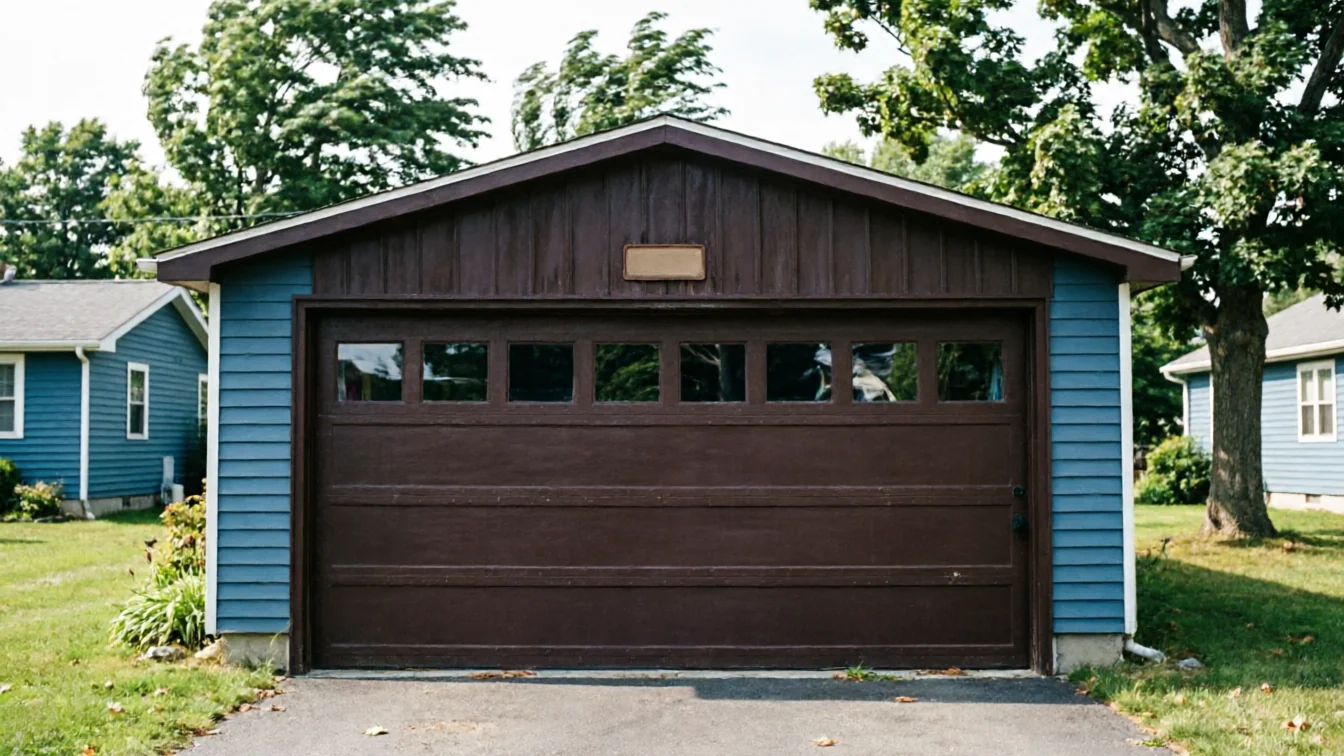
Most homeowners treat a garage door like a wall. It isn't one. A single-car door is a stiff panel, but a wide double door - the kind common on houses built here between 1938 and 1993, with the median year sitting around 1968 - is a long, thin span held up by hardware that was never asked to resist lateral push. People check the opener, check the remote, maybe lube a roller once a year, and call that maintenance. They never look at the track brackets or the strut running across the top panel, which is exactly where a wide door fails first. The mistake isn't neglect so much as looking in the wrong place. On a door this wide, the failure point under wind isn't the spring or the motor - it's the thin sheet metal between the hinges, and the brackets bolted into jamb studs that have had fifty-plus years to loosen.
This matters more in a service area built out the way Worcester was. Across the 55 named neighborhoods here, from Burncoat to Quinsigamond Village, the bulk of the housing stock dates to that same 1960s-70s wave, and a lot of those garages were built for two cars side by side under one wide opening rather than two narrow ones. That single wide span is structurally the more vulnerable shape, and it's the shape that dominates the local housing stock.
The Problem
A wide door has more surface area pushing against the same number of anchor points as a narrow one. Wind doesn't need to be dramatic to matter - steady pressure against a 16-foot panel loads the track brackets and the center strut far more than the same wind loads a single 9-foot door. Add age. Houses built in the 1938-1993 window this area is made up of often still have original track hardware, or a replacement door hung on the original jamb brackets, which were sized to a 1960s-70s build standard, not to today's door weights or wind expectations.
The failure mode is rarely dramatic either. It's a track that bows an inch at the middle, a roller that jumps the rail under load, or a bracket that pulls two of its four lag screws out of softened jamb wood. None of that stops the door from opening and closing most days. It shows up the one day the wind actually pushes back - and in a cold-climate service area like this one, that's also the day you most need the door sealed and working, not racked sideways on a bent track.
What to Check
Start at the top strut - the horizontal bar bolted across the top panel of a double door. On older doors it's often missing, undersized, or rusted thin. If you can flex the top panel by hand, wind can flex it too.
Next, the track brackets where they lag into the framing. Grab each one and try to rock it. On a house from the 1938-1993 era, fifty-plus years of seasonal wood movement loosens lag screws more than people expect, and a loose bracket is the first thing to give under lateral load.
Check the rollers for play side to side, not just up and down - a worn roller lets the door walk sideways in the track under pressure. And look at the astragal and weatherstrip on the bottom and sides. On a wide door, gaps here aren't just a draft problem; a door that's already slightly out of square from age has more room for wind to catch an edge and lever against it.
We don't recommend wind-rating retrofits as a stand-alone fix on a door already past its service life - if the panels are original to a house from this era and the track is bowed, reinforcing an old door usually costs more over time than a wider, braced replacement sized to the opening you actually have.
What the Weather Here Does to It
This area sits in a cold, severe climate band, and that changes what wind does to a door beyond the push itself. Cold makes steel brittle and springs stiffer, so a gust that a door shrugs off in warmer months can be the load that finally pops a weakened bracket in January. Track hardware that's slightly bent also binds harder when metal contracts in cold, so a door already fighting a bowed track under wind works against more friction right when you need the opener to have less to fight.
With 99,459 owner-occupied houses across this service area, most sitting on that same 1960s-70s stock, this isn't a rare combination - it's the baseline condition for a lot of garages here. A median household income of $113,402 across the area means replacement is a realistic option for most owners facing a door that's failing structurally, not just cosmetically, rather than stacking repair cost on top of repair cost for hardware sized to a different era.
Frequently asked questions
Can a strong wind actually damage my garage door in Worcester?
Yes, especially on wide double doors common in houses built here between the 1930s and 1990s. The risk isn't the wind alone - it's wind acting on a door whose track brackets or top strut have loosened over decades. A door in good repair handles wind fine; one with worn hardware is where the damage shows up.
Is my door more at risk because it's a wide double door?
Generally yes. A wide span has more surface area pushing against the same bracket points as a narrower door, so it loads the hardware harder. This is common on houses from the 1960s-70s building wave here, many of which were built with one wide two-car opening instead of two single doors.
Should I reinforce an old door or just replace it?
Depends on the door's age and condition. If the track is already bowed or the panel flexes by hand, reinforcing an original door from a house built decades ago usually isn't worth the cost compared to a new door sized and braced for the opening. We'd rather tell you that upfront than sell a patch job.
Does cold weather make wind damage worse?
It can. In a cold, severe climate, steel hardware stiffens and binds more under contraction, so a door already fighting a bent track works against more resistance exactly when a gust hits. Cold doesn't cause the damage by itself, but it makes an already-weak point more likely to fail.
Related garage door services in Worcester
More garage door guides
Book garage door service in Worcester
Call now or request a quote - tell us what the door is doing and where you are.