
Worcester, MA · Garage Door Service
Why a Door Goes Off Track, House by House
Worcester's 1960s-70s housing stock and hard winters push garage door tracks out of alignment. Here's what actually causes it and what to check before it gets worse.
- Repairs & new doors
- Springs & openers
- Serving 4 nearby communities
The Common Mistake
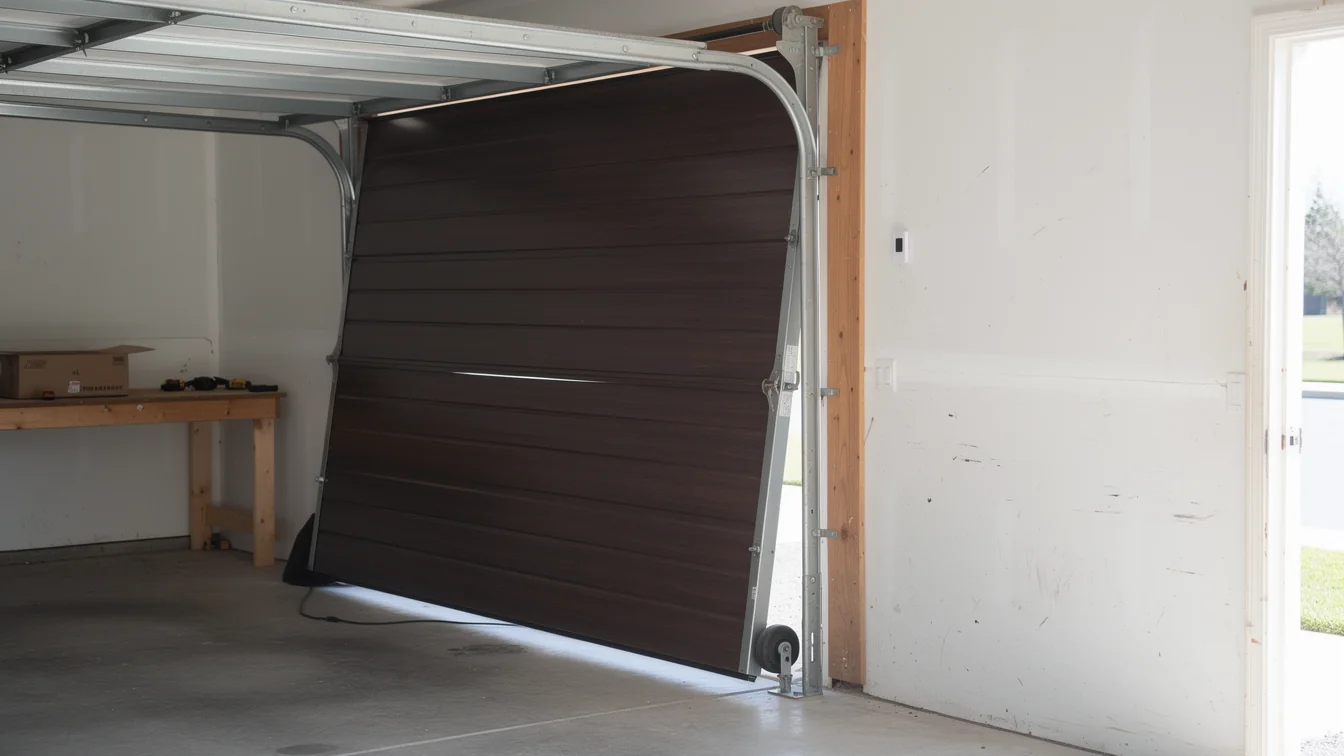
Most homeowners figure a door jumped track because something hit it. That happens, sure, but around Worcester the more common cause is slower and less dramatic: a track that's been pulling out of alignment for months, one loose bracket at a time. With housing here built mostly between 1938 and 1993 and a lot of it dating to the 1960s and 70s, the original track hardware in a lot of these garages is old enough that the lag screws have worked loose in wood jambs that have shrunk and shifted over sixty-plus years. Nobody notices until the day the door finally binds or drops off the roller on one side. The mistake isn't ignoring a crash - it's ignoring the quiet warning signs for years because the door still opened and closed. By the time it jumps track, the hardware holding that track in place has usually been marginal for a long while.
The Problem
A track goes off because the rail isn't being held in a true vertical line anymore. On the older stock in neighborhoods like Greendale, Burncoat, and West Tatnuck, where original wood framing has settled over decades, the brackets anchoring the track to the jamb back out a sixteenth of an inch at a time. A rail that's even slightly bowed or twisted lets the roller ride up on the edge of the track instead of staying seated in the channel. Add a broken or unbalanced spring - common on doors this age since original springs were never rated for 50+ years of cycles - and the door no longer travels evenly on both sides. One side moves faster than the other, the roller walks off the rail, and the door drops. This isn't a one-town problem in the abstract, but the age of Worcester's housing stock (median build year 1968, per F1) means a large share of local doors are carrying track hardware well past its intended service life.
What to Check
Start at the brackets, not the door. Grab the track with both hands at each joint and see if it moves independently of the wall - if it does, the lag screws have backed out and that's your answer. Next, look at the gap between roller and track along the whole run; a track that bows outward even an inch creates enough slack for a roller to climb out under stress. Check both torsion springs for even tension - on older one-piece or sectional doors common to Worcester's 1960s-70s builds, a spring that's lost tension on one side puts all the pull on the other, which twists the door off square. Finally, check the floor track brackets at the bottom, since basement-level garages built into a slope - not uncommon on Worcester's hillier parcels - take more lateral load than flat-slab garages. None of this requires tools beyond a flashlight and a ladder, but a bowed track usually needs replacement, not realignment - bending it back rarely holds.
What the Weather Here Does to It
Worcester sits in a severe cold climate band, and that matters for tracks specifically because metal contracts in cold and the grease in old roller bearings thickens or hardens. A roller that's dragging instead of spinning freely puts side-load on the track instead of straight-line pull, and that side-load is what walks brackets loose over a winter. Houses built in the 1938-1993 range often still have steel tracks mounted directly to unheated garage framing, with no thermal break, so the whole assembly moves more with temperature swings than it would in a milder climate. We see more off-track calls in the first hard cold snap of the season than any other time of year, because hardware that was marginal all fall finally gives. We can't make a sixty-year-old track immune to frost movement - at some point replacement is the honest answer, not another adjustment.
Frequently asked questions
Can I push a door back onto the track myself?
You can sometimes reseat a roller that's just barely off the rail, with the door down and the opener disconnected. But if a spring is involved or the track is visibly bent, forcing it back risks the door falling. On older Worcester housing stock with original hardware, we'd rather look at it first.
Why does this happen more in winter here?
Cold hardens bearing grease and contracts steel, so rollers drag instead of rolling freely. That drag pulls unevenly on the track, and with Worcester's severe cold climate band, that strain peaks during the first deep cold snap each season.
Is a bent track worth repairing or replacing?
A track that's bowed more than about a half inch along its length usually won't hold true after bending it back. On houses with original 1960s-70s hardware, replacement is often the more honest fix than trying to save a track that's already stretched past tolerance.
Related garage door services in Worcester
More garage door guides
Book garage door service in Worcester
Call now or request a quote - tell us what the door is doing and where you are.