
Worcester, MA · Garage Door Service
Is Your Old Worcester Garage Door Worth Fixing or Replacing
Worcester homes mostly date 1938-1993, median 1968. Here's what to check before replacing an older garage door in this climate and housing stock.
- Repairs & new doors
- Springs & openers
- Serving 4 nearby communities
The Common Mistake
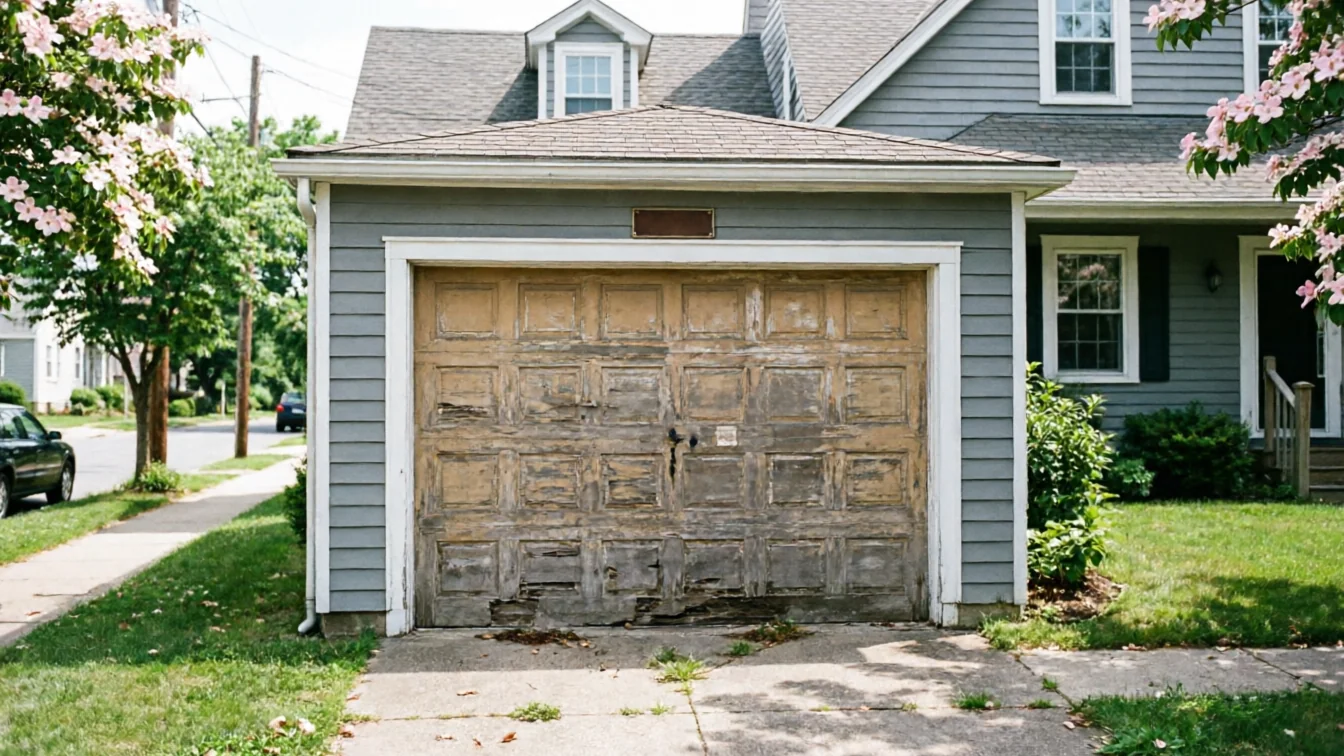
The mistake we see most around Worcester is someone calling for a full replacement quote when the actual problem is a thirty-dollar part. Because most houses in this city went up between 1938 and 1993, with the median build year sitting at 1968, a huge share of garage doors here are original or close to it - single-layer steel or wood panel doors on hardware nobody has touched since Nixon was president. People assume that age alone means the door is done. It usually doesn't. A door from that era with a bent track, a seized roller, or a worn cable is still a repair, not a replacement, as long as the panel itself and the frame haven't failed. The flip side of the mistake is the opposite error: patching a door whose panels have delaminated or rusted through at the bottom corners, which is common on these older builds once the weatherstrip has failed for a few winters running. Knowing which one you've got is the whole job.
The Problem
Doors built or installed in that 1960s-70s window across Worcester's older neighborhoods were made for a different world - lighter springs, thinner steel, no insulation, and hardware sized for openers that didn't exist yet. When a homeowner adds a modern opener to a 1968-era door, the door often can't handle the cycle count or the torque, and something in the original hardware - the track brackets, the end bearings - starts to go first. That's not a sign the door is worthless. It's a sign the door and the opener were never matched to begin with. The real problem shows up when the steel skin itself is the failure point: rust-through at the bottom panel, delamination on an old wood-composite door, or a frame that's racked out of square from decades of settling in housing this old. Once you're at that point, no amount of spring or roller work saves the door, and that's the line between a repair call and a replacement.
What to Check
Start at the bottom panel - on a door built before the 1980s, that's where moisture does the most damage over time, and rust-through there usually means the rest of the panels aren't far behind. Next, check the track alignment; original hardware on a house from the 1960s or 70s was rarely engineered for today's heavier insulated sections, so bent or bowed track is common on doors that have had a replacement installed without upgrading the brackets. Look at the springs - if they're original, they're decades past any reasonable service life regardless of how they look. Check the bottom seal and weatherstrip too, since a door that's lost its seal here has been losing the fight against the cold for years, and that shows up as rust creeping up from the bottom edge even on doors that otherwise look fine. If the panels are solid, the track is straight, and it's just springs, cables, or rollers, that's a repair. If the skin is failing in more than one spot, replacement is the honest answer.
What the Weather Here Does to It
Worcester sits in a cold, severe climate band, and that matters more for an older door than almost anything else on this list. Decades of freeze-thaw cycling work on steel and wood the same way they work on pavement - moisture gets into seams and panel edges, freezes, expands, and widens the gap a little more each winter. On a door built in the 1960s or 70s without the insulation and sealing standards used today, that cycle has had fifty-plus years to do its work. It's also why a spring that's merely old in a milder climate can be outright dangerous here - cold steel is less forgiving under tension, and a torsion spring on an original 1960s-era door is carrying decades of fatigue plus the added stress of repeated cold snaps. We won't pretend every older door can be saved - once the steel's rusted through or the panels have delaminated from years of trapped moisture, patching it is just delaying the inevitable at the homeowner's expense.
Frequently asked questions
My garage door is from the 1960s. Is it even worth repairing?
Often, yes. If the panels and frame are solid and the problem is springs, cables, rollers, or track alignment, repair makes sense even on a door that old. The issue is usually the hardware wearing out, not the door itself failing. We only recommend replacement when the steel skin is rusted through or the panels have delaminated.
Why does my old door seem worse every winter?
Worcester's cold, severe climate puts older doors through repeated freeze-thaw cycles. Moisture gets into seams and panel edges from past winters, freezes, and widens the damage a bit more each year. A door built decades ago without modern sealing standards shows this faster than a newer one.
Should I replace the whole door if just the opener is new?
Not automatically. Plenty of original doors from the 1960s and 70s can run fine with a modern opener if the track and hardware are upgraded to match. The failure point is usually mismatched hardware, not the door panel itself. Have the track and brackets checked before assuming the door needs to go too.
Related garage door services in Worcester
More garage door guides
Book garage door service in Worcester
Call now or request a quote - tell us what the door is doing and where you are.