Worcester, MA · Garage Door Service
Garage Door Panel Replacement for Grafton Homes
Panel replacement for Grafton homes built mostly in the 1970s, where steel panels corrode from the inside out before they ever look bad from the street.
- Repairs & new doors
- Springs & openers
- Serving 4 nearby communities
The Complications
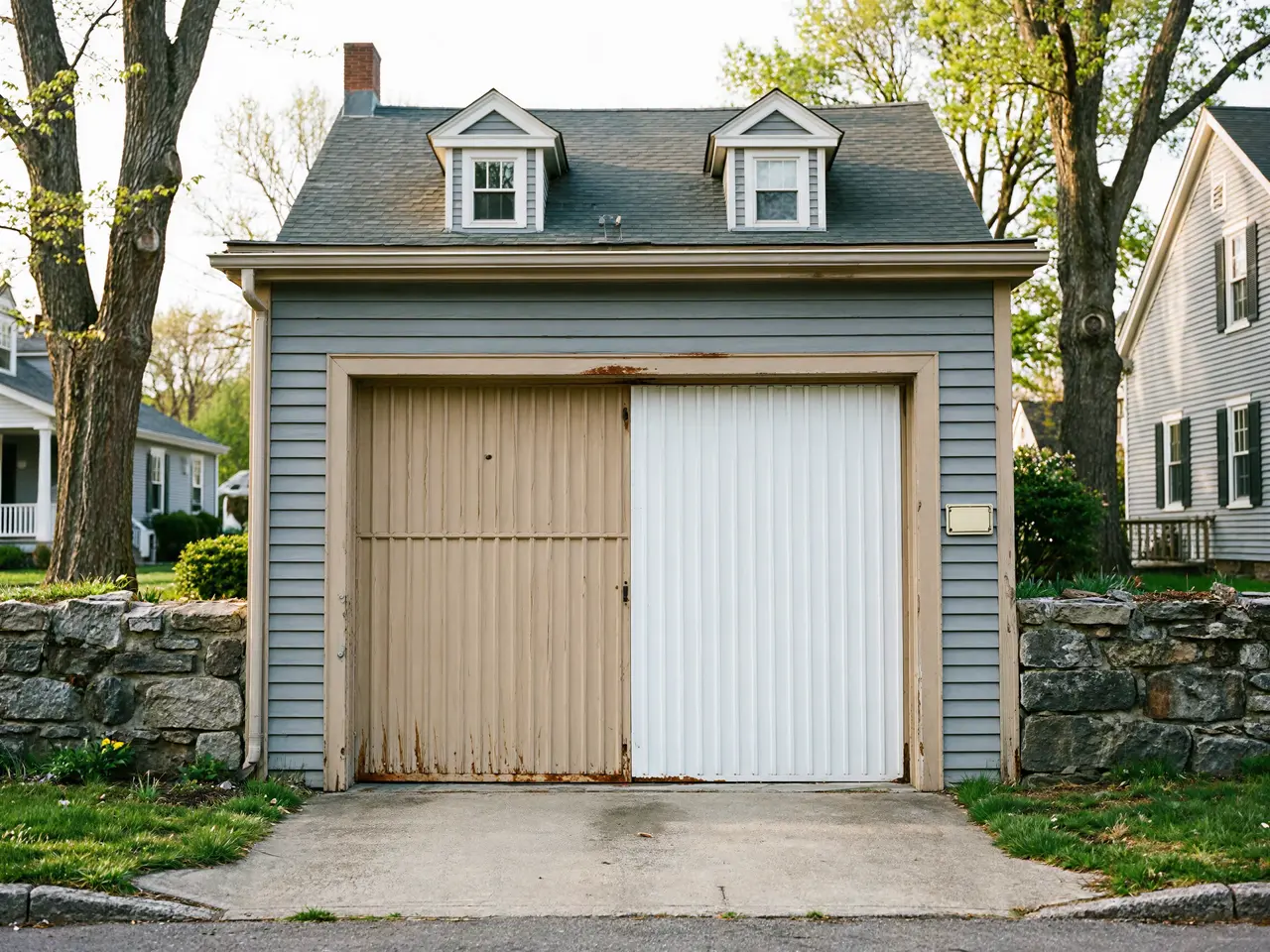
The panel fault we see most in Grafton isn't a dent from a bumper. It's a bottom panel that's gone soft and spongy along the bottom edge, with rust blooming from the inside out where you can't see it until you press a thumb into the steel and it gives. Grafton's housing stock centers on 1976, which puts a lot of these doors squarely in the era of single-skin and early sandwich-core steel - good doors for their time, but the foam core on the early sandwich panels traps moisture against the steel instead of shedding it. Thirty-some winters of that cycle, freeze and thaw against a panel that never fully dries, and the bottom section fails well before the rest of the door looks tired.
Grafton sits in the same severe cold climate band as the rest of the Worcester service area, which matters more for panels than people expect. It's not the cold itself - it's the cycling. A panel that gets wet from snowmelt against the slab, then freezes overnight, then thaws again the next afternoon, is under more stress in a Grafton January than a door in a milder climate sees all year. That's where we find the failure starting, low on the door, not at the top where the sun and the opener hardware get the attention.
What the Fix Involves
Panel replacement starts with matching, and that's the part that eats the most time on a call like this. A door built around 1976 may have a section profile - the groove pattern, the panel height, the hinge spacing - that newer stock doors don't match exactly. We measure the existing sections before we order anything, because showing up with a panel that's close but not right means a second trip and a door that doesn't seal evenly along the seam.
Once the right section is in hand, the job itself is mechanical: pull the door, disconnect the hinges and rollers from the damaged section, swap it in, and reset the hinges so the new panel sits flush with its neighbors. On a double-car door with a bottom panel failure, we're also checking the astragal seal at the bottom, since a panel swap on an older door often exposes a seal that's past its useful life too. We'll tell you straight if that's the case rather than send you a bill later for something we could have flagged on the first visit.
The DIY Question
A single cosmetic dent that hasn't broken the steel skin is sometimes a job a homeowner can live with or even pull out themselves with a block and a mallet, carefully. A rusted-through bottom panel, or a section where the foam core has separated from the steel, is a different animal - the hinges have to come off in the right order, the door has to stay supported while a section is out, and torsion spring tension doesn't care whether you're paying attention. We won't talk anyone out of trying the cosmetic fix. We will say that on a door old enough to be original to a mid-70s Grafton build, replacement hardware - hinges, rollers - is often worn enough that swapping the panel without also addressing those parts just moves the next failure down the road a few months.
Parts We Carry
We stock common panel sections and hardware sized for the door generations that match Grafton's 1976 median build year, along with the standard steel sections used on newer replacement doors. What we don't keep on the truck is a panel matched to every discontinued profile from the 1960s and 70s - some of those sections are no longer made by any manufacturer, full stop, and on those doors the honest answer is a full door replacement rather than a chase for a part that doesn't exist anymore. We'll tell you which situation you're in before we order anything, not after.
How It Shows Up
Most calls start the same way: a visible dent or a soft spot low on the door, sometimes with daylight showing through a seam that used to be tight. On older sandwich-core panels, you'll often see the outer skin bulge or ripple slightly before it actually tears - that's the foam core breaking down inside, and it's worth a call before the panel gives way entirely. On newer single-skin steel doors it's more often a straight impact dent, clean edges, no rust involved. Either way, a panel that's failed on one section usually means the door is out of square at that point, which puts extra load on the opener and the track on either side of the gap until it's fixed.
Booking a Visit
We cover Grafton out of our Worcester base, about 8 miles up the road, so a panel job here goes on the same schedule as the rest of the territory - no separate branch, no different crew. If you've got a bottom panel that's gone soft or a dent that's starting to show rust at the edges, get in touch and we'll get a measurement and a part number sorted before we're on site, so the visit is the repair and not a second trip to go find the right section.
Frequently asked questions
Why does my garage door panel look fine from the driveway but feel soft when I press on it?
On older sandwich-core panels, the steel skin can hold its shape even after the foam core underneath has broken down or separated from moisture cycling. That's common on doors from the 1970s building era common in Grafton. The panel looks straight until you press on it, and by the time it visibly sags, the core has usually been failing for a while.
Can you match a panel to a door built in the 1970s?
Sometimes. We measure the section profile and hinge spacing before ordering, since some mid-70s profiles were discontinued by the manufacturer decades ago. If we can't source a matching section, we'll say so plainly rather than install something close that won't seal right, and we'll talk through full-door replacement instead.
Is one damaged panel enough reason to replace the whole door?
Not usually, if the rest of the door is sound and we can match the section. It becomes the better call when the panel profile is discontinued, when hinges and rollers on the rest of the door are near the end of their life anyway, or when more than one section shows the same wear - at that point you're paying for parts and labor twice instead of once.
Does Grafton's winter weather make panel failures worse?
Yes. Grafton sits in the same severe cold climate band as the rest of the area we cover, and the freeze-thaw cycling through winter is harder on a wet panel than the cold itself. Moisture trapped against the bottom section from snowmelt, then frozen overnight, accelerates corrosion and core breakdown faster than a steady cold without the thaw cycles.
Book garage door service in Worcester
Call now or request a quote - tell us what the door is doing and where you are.